How to Choose the Perfect Perfume | Heritage Perfumes
Learn how to choose the perfect perfume based on your personality, fragrance notes, lifestyle, and occasions with this complete beginner's guide.
Kaif Shaikh
1/3/20267 min read
How to Choose the Perfect Perfume for Your Personality
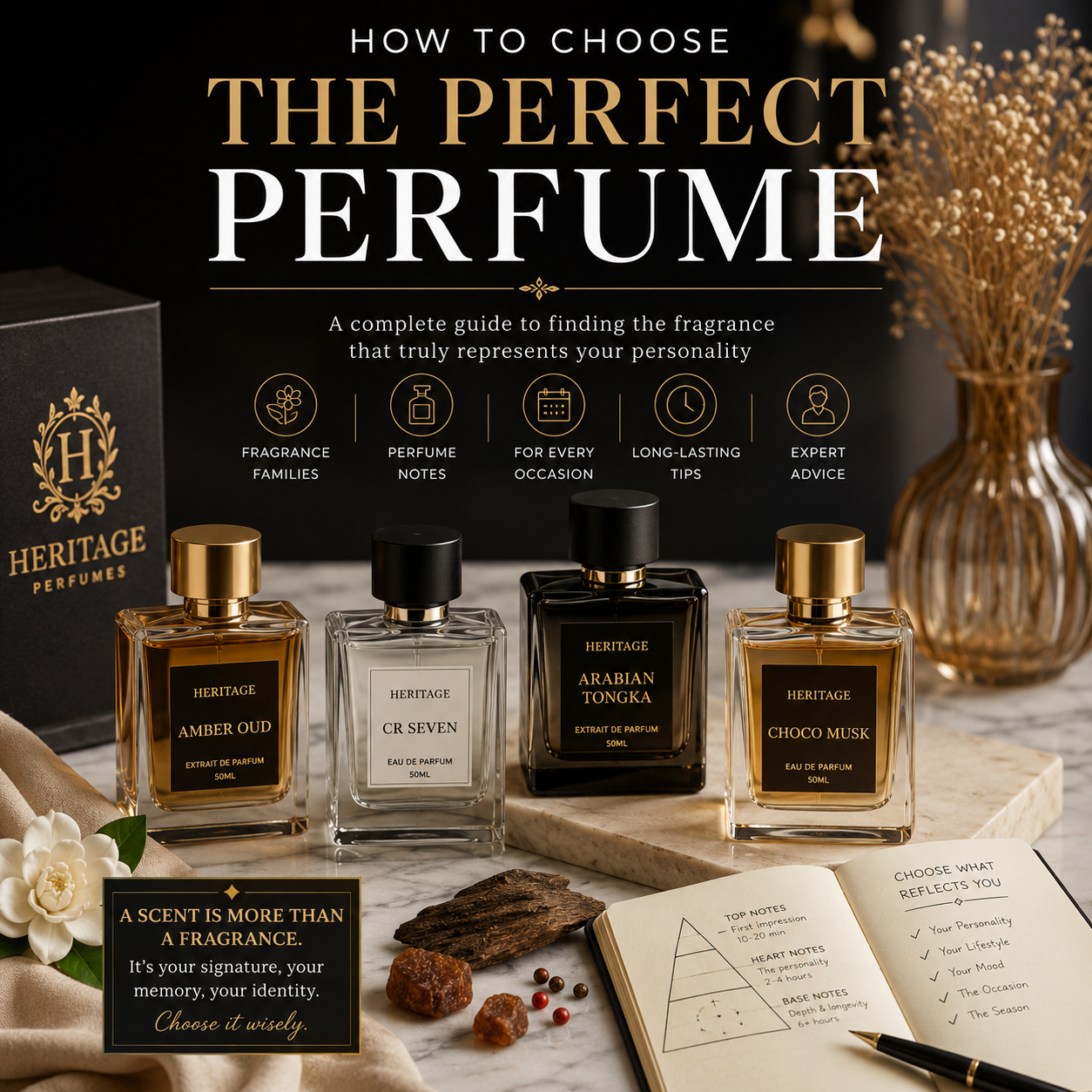
Choosing a perfume is more than simply picking a pleasant fragrance. A well-chosen perfume becomes a part of your identity, expressing your personality before you even speak. The scent you wear can leave a lasting impression, evoke memories, and influence how others perceive you. Whether you are purchasing your first fragrance or looking to expand your collection, understanding the basics of perfumery will help you make a confident and informed choice.
The modern perfume industry offers thousands of fragrances, each with its own unique blend of ingredients and characteristics. While having so many options is exciting, it can also make choosing the right perfume feel overwhelming. Many people buy perfumes based solely on attractive packaging, celebrity endorsements, or online trends, only to discover later that the fragrance doesn't suit them.
The truth is that the perfect perfume is highly personal. It should match your lifestyle, personality, preferences, and even the climate you live in. A fragrance that smells wonderful on one person may smell completely different on someone else due to individual skin chemistry.
In this guide, you'll learn everything you need to know before buying a perfume, including fragrance families, perfume notes, longevity, occasions, seasonal recommendations, and common mistakes to avoid. By the end, you'll understand how to choose a fragrance that truly feels like your own.
Why Choosing the Right Perfume Matters
A good perfume does much more than make you smell pleasant. Fragrance has a powerful connection with memory and emotion. Studies have shown that our sense of smell is closely linked to the parts of the brain responsible for emotions and long-term memories. Because of this, a signature fragrance can become one of the most memorable aspects of your personal style.
Perfume also plays an important role in confidence. Wearing a fragrance you genuinely enjoy can make you feel more comfortable in social situations, professional meetings, celebrations, or everyday life. Many people describe perfume as the final step in getting ready because it completes their overall appearance.
Choosing the right fragrance is therefore not about following trends—it's about finding a scent that reflects who you are and complements your daily life.
Understanding Fragrance Families
One of the easiest ways to find a perfume you'll love is by understanding fragrance families. Every perfume belongs to one or more fragrance families based on its dominant scent profile. Knowing these categories helps narrow your choices and makes perfume shopping much more enjoyable.
Floral Fragrances
Floral perfumes are among the most popular fragrance families worldwide. They feature notes such as rose, jasmine, lily, lavender, peony, and mogra. These scents often feel soft, elegant, romantic, and timeless.
Floral fragrances are ideal for:
Everyday wear
Office environments
Weddings and celebrations
Spring and summer seasons
People who enjoy classic elegance, gentle aromas, and sophisticated scents usually prefer floral perfumes.
Woody Fragrances
Woody perfumes contain ingredients like sandalwood, cedarwood, patchouli, vetiver, and oud. These fragrances create warmth, richness, and depth, making them popular among both men and women.
Woody fragrances are perfect for:
Evening wear
Business meetings
Winter months
Formal occasions
If you enjoy mature, luxurious, and confident scents, woody fragrances are an excellent choice.
Fresh Fragrances
Fresh perfumes include citrus fruits, aquatic accords, green leaves, herbs, and light aromatic ingredients. These scents feel clean, refreshing, and energetic.
Common fresh notes include:
Bergamot
Lemon
Orange
Grapefruit
Mint
Marine accords
Fresh perfumes work especially well for:
Daily wear
College
Office
Hot summer weather
Gym and casual outings
They are often chosen by people who appreciate simple, modern, and energetic fragrances.
Amber Fragrances
Previously called "oriental" by many fragrance houses, amber fragrances are warm, rich, and luxurious. They often combine vanilla, spices, resins, incense, musk, and amber accords.
These perfumes are commonly worn during:
Festivals
Weddings
Evening events
Winter
Amber fragrances project confidence and elegance while leaving a memorable impression.
Gourmand Fragrances
Gourmand perfumes smell almost edible. They include delicious notes like chocolate, vanilla, coffee, caramel, honey, almonds, and sweet musk.
These fragrances have become increasingly popular because they feel warm, comforting, and unique.
Gourmand perfumes are excellent for:
Date nights
Winter evenings
Casual gatherings
Cooler weather
People who enjoy sweet fragrances often find gourmand perfumes irresistible.
Understanding Perfume Notes
Many beginners spray a perfume once and decide immediately whether they like it. This is one of the biggest mistakes people make.
A perfume changes continuously after application. Professional perfumers design fragrances in three distinct stages called notes.
Top Notes
Top notes are the first scents you notice immediately after spraying a perfume.
These usually include:
Lemon
Orange
Bergamot
Grapefruit
Mint
Lavender
Top notes create the first impression but usually disappear within 10 to 20 minutes.
Heart Notes
After the top notes fade, the heart notes begin to emerge.
Heart notes represent the true personality of the perfume.
Common heart notes include:
Rose
Jasmine
Mogra
Lily
Cinnamon
Cardamom
Heart notes generally remain noticeable for two to four hours depending on the perfume concentration.
Base Notes
The base notes form the foundation of every fragrance.
These ingredients remain on the skin the longest and determine much of the perfume's longevity.
Typical base notes include:
Musk
Sandalwood
Oud
Vanilla
Amber
Patchouli
A high-quality base creates a smoother, longer-lasting fragrance experience.
Why Perfume Smells Different on Everyone
Many people ask:
"My friend uses the same perfume, but it smells different on me. Why?"
The answer lies in skin chemistry.
Every person's skin has a unique combination of natural oils, moisture levels, body temperature, diet, hormones, and pH balance. These factors influence how fragrance molecules develop after application.
For example:
Oily skin often helps perfume last longer.
Dry skin may cause fragrance to fade more quickly.
Warm skin increases fragrance projection.
Cold weather slows fragrance evaporation.
This is why experts always recommend testing a perfume on your own skin rather than judging it only on a paper strip.
How to Test a Perfume Properly
Buying a perfume without testing it correctly often leads to disappointment. Many fragrances smell wonderful during the first few minutes but change significantly as they settle on the skin. To understand how a perfume truly performs, follow these simple steps.
Spray on Your Skin, Not Just Paper
Paper tester strips are useful for getting an initial impression, but they cannot replicate how a perfume reacts with your skin chemistry. Always spray the fragrance on your wrist or the inside of your elbow.
Avoid Rubbing Your Wrists Together
Many people rub their wrists immediately after applying perfume. This is a common mistake. Rubbing creates friction, which can alter the development of the fragrance, especially the delicate top notes.
Instead, allow the perfume to dry naturally.
Give It Time
A perfume needs time to develop. Wait at least 20–30 minutes before deciding whether you like it. Some fragrances become richer and smoother after an hour.
If possible, wear the perfume throughout the day to understand its full performance.
Choosing Perfume for Different Occasions
No single perfume is perfect for every situation. Having different fragrances for different occasions allows you to express yourself appropriately.
Everyday Wear
For daily activities, choose fragrances that are clean, fresh, and comfortable. Citrus, aquatic, and light floral perfumes are excellent options because they are pleasant without being overpowering.
Office and Professional Settings
In a workplace, your perfume should be noticeable only when someone is close to you. Strong fragrances may distract others.
Fresh, woody, and subtle floral fragrances are ideal choices for professional environments.
Weddings and Celebrations
Special occasions allow you to wear richer fragrances with stronger projection and longevity.
Amber, oud, musk, sandalwood, vanilla, and warm spicy notes create an elegant and memorable impression.
Date Nights
A romantic evening often calls for deeper and more sensual fragrances.
Popular choices include:
Vanilla
Chocolate
White Musk
Amber
Sandalwood
Warm floral blends
These notes create warmth and sophistication without feeling overwhelming.
Common Mistakes People Make When Buying Perfume
Many buyers unknowingly choose the wrong perfume because they focus on appearance rather than the fragrance itself.
Some of the most common mistakes include:
Buying only because a perfume is trending.
Choosing a fragrance without testing it.
Judging the perfume after only one spray.
Purchasing solely because of attractive packaging.
Wearing extremely strong perfumes in professional environments.
Storing perfume in direct sunlight or humid places.
Avoiding these mistakes will help you enjoy your fragrances for much longer.
How to Build Your First Perfume Collection
If you're new to perfumes, you don't need dozens of bottles. A small, carefully selected collection is usually enough.
A balanced collection could include:
A Fresh Daily Perfume
Perfect for work, college, and casual outings.
A Rich Evening Perfume
Suitable for dinners, parties, and celebrations.
A Special Occasion Perfume
Reserved for weddings, festivals, and important events.
A Signature Fragrance
The scent people begin to associate with you.
As your preferences develop, you can gradually explore different fragrance families and styles.
Frequently Asked Questions
How many sprays of perfume should I use?
For most perfumes, 2 to 5 sprays are enough. Stronger fragrances may require fewer sprays, while lighter perfumes may need a little more.
Why doesn't my perfume last long?
Several factors affect longevity, including perfume concentration, skin type, weather, and where you apply it. Moisturized skin and pulse points often help fragrances last longer.
Should I spray perfume on clothes or skin?
Both methods work, but skin allows the fragrance to develop naturally. If spraying on clothes, always test first to ensure the fabric won't stain.
How should perfume be stored?
Keep perfumes in a cool, dry place away from direct sunlight and extreme heat. Proper storage helps preserve the fragrance and extends its shelf life.
Is expensive perfume always better?
Not necessarily. A well-crafted perfume with quality ingredients can provide an excellent experience regardless of price. The best perfume is the one that suits your preferences and lifestyle.
Final Thoughts
Choosing the right perfume is a journey of discovering what suits your personality, lifestyle, and preferences. Rather than following trends or buying based on appearance alone, take the time to understand fragrance families, perfume notes, and how different scents interact with your skin.
A fragrance becomes more than just a pleasant aroma—it becomes part of your identity. Whether you prefer fresh citrus blends, elegant florals, rich woody compositions, or warm gourmand fragrances, the perfect perfume is one that makes you feel confident every time you wear it.
By testing fragrances patiently, storing them correctly, and selecting scents for different occasions, you can build a collection that truly reflects your style and leaves a lasting impression wherever you go.
Quick Summary
✔ Understand fragrance families before buying.
✔ Always test perfume on your skin.
✔ Wait for the fragrance to develop fully.
✔ Choose perfumes based on your lifestyle and occasion.
✔ Store perfumes properly to maintain their quality.
✔ Build a small collection instead of relying on just one fragrance.
SEO Keywords Naturally Included
how to choose a perfume
perfume buying guide
perfume for beginners
fragrance families
perfume notes
best perfume
long-lasting perfume
signature fragrance
perfume guide
how to test perfume